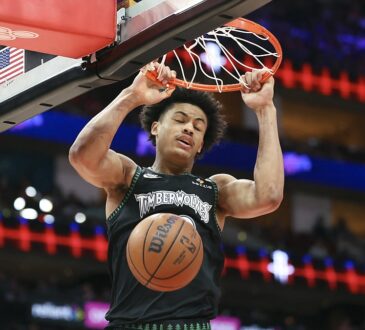
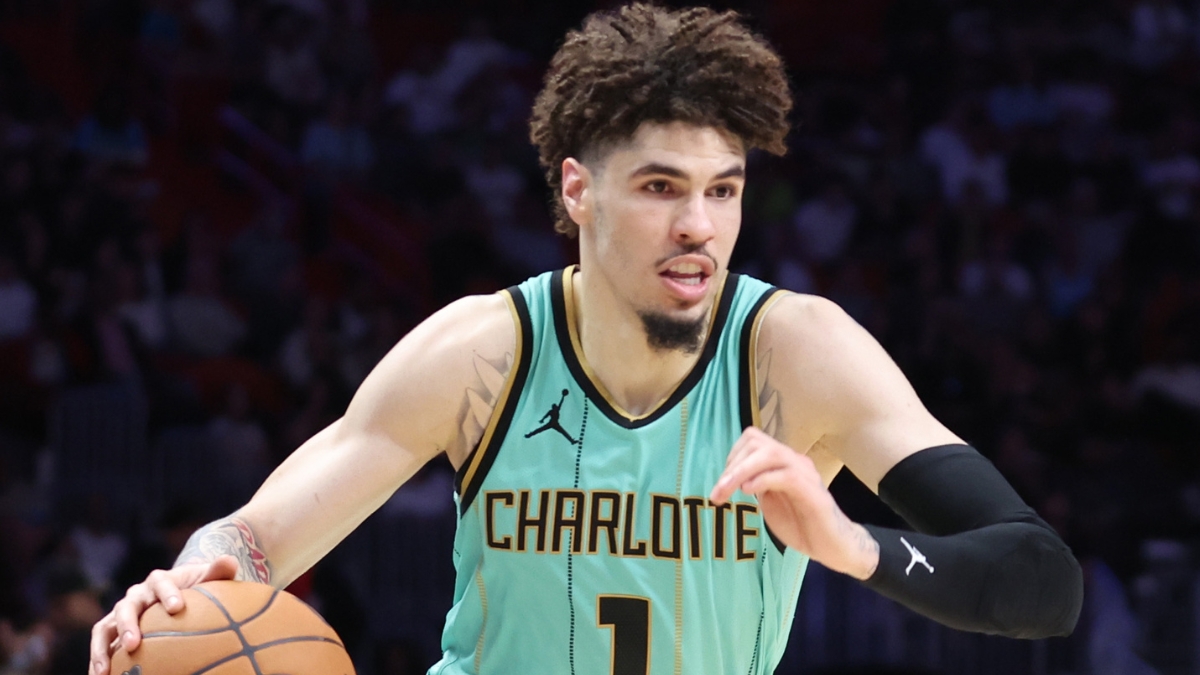

The Charlotte Hornets pulled off a stunner of a trade on Thursday morning, sending LaMelo Ball and Josh Green to the Minnesota Timberwolves in exchange for Naz Reid, a 2033 first-round pick, three first-round pick swaps (2028, 2029, 2030) and three second-rounders (2029, 2032, 2033).
So, essentially, the Hornets dealt Ball for Reid, a first-round pick nearly a decade into the future and three second-rounders, the earliest of which is three years from now.
What exactly was Charlotte thinking, especially after taking such a massive step forward with a 44-win campaign this past season?
Well, clearly, the Hornets wanted to get out from under Ball’s contract, which will pay him $40.8 million next season, $43.6 million in 2026-27 and $46.4 million in 2027-28. There are no opt outs in the deal.
Remember: before the start of the 2025-26 campaign, Ball was viewed as a trade candidate and, largely, a negative asset. After all, he had played in a grand total of 105 games the preceding three seasons, and his lack of efficiency and poor defense had left many with a bad taste.
Ball did have a stronger year this past season, appearing in 72 contests and helping lead Charlotte to a play-in appearance, but he shot 40.7 percent from the floor and managed a true-shooting percentage of 54.6 percent. He also attempted a career-low 2.5 free throws per game.
That’s not to say that Ball didn’t play well; he did. But it seems like people are more in awe of the player they think Ball is rather than the player he actually is.
And who is LaMelo Ball? An uber-talented player who has never been able to put it all together nor consistently stay healthy, and somehow who will likely always have severe holes in his game.
Ball is a lifetime 41.8 percent shooter. He has played in 70 games just twice since entering the league in 2020. His defense will generally always be a significant question mark, this in spite of the fact that he has some impressive physical tools.
Let’s also keep in mind that Ball’s maturity has been questioned ever since he joined the NBA, so that could be another pressing reason why the Hornets moved him.
The fact that Charlotte received such a skimpy return for Ball (those pick swaps mean virtually nothing) is an indication that he is still not viewed all that favorably around the league, and while the idea of a Ball-Anthony Edwards backcourt is interesting, it could just as easily go up in smoke.
Ball is still just 24 years old, and again, he is super talented. So perhaps he will emerge as a legitimate reliable star in Minnesota. But it’s pretty clear that the Hornets were fine dumping his contract, and most teams were just fine watching him get dealt.